Friday, September 22, 2017

Stem Mastering for Enhanced Audio Quality


Stem mastering is a relatively recent development in the world of audio engineering. It’s a process that can have a pretty dramatic effect on the final result of a musical production, but what is it and how does it differ from traditional stereo mastering? That's what we are going to dive into.

Traditional Stereo Mastering

In a traditional mastering scenario, you are given stereo files. No matter how many tracks make up the mix of a song, it is mixed down to a single stereo track. Within the confines of these stereo files, the mastering engineer works to correct any issues and increase the fidelity of the audio being processed. Typically, the goal isn’t to rebalance the mix, just make corrections and enhance an already balanced mix.

There are quite a few limitations with stereo mastering since you are dealing with a mix that has multiple elements spread across the entire frequency space. These limitations aren’t usually problematic assuming a well-balanced mix, but let’s take a look at a scenario.

You have a mix where the vocals are too bright but the instrumental portion that makes up the music is dull. You want to brighten up the instrumental but doing that would make the vocals which were too bright to begin with, insanely bright. Sure, you can try and resort to some creative processing to compensate for this, but it is less than ideal. Neither the instrumental nor the vocals are going to be where they need to be and that's the tradeoff. This is just one of many potential scenarios that happen with increasing regularity.

In the previous case, you go back to the mixer/artist/producer and ask for a revision explaining the situation. Hopefully, on the next run, you get what you need to finish the master.

Stem Mastering

Stem mastering aims to address some of the issues that can’t be addressed by traditional stereo mastering. Instead of just having one stereo mix of the entire song, you have multiple stereo files that make up the core elements of the mix. You then take these individual stereo files and create a single stereo master from them.

These audio files provided could be as simple as an instrumental and a vocal stem to the individual subgroups of instruments that make up the mix. There are no rules here on which stems to provide and every engineer is going to have their preference, but let’s take an example of what you might provide for a modern a rock song:

  • Drums
  • Bass
  • Guitars
  • Leads
  • Synths / Pianos
  • Vocals
  • Sound Effects (Car crashes, sub drops, reverse cymbals, etc) 
  • Effects (Delays, Reverbs, etc)

This is just 8 stereo tracks. So the entire mix, which may have been 100's of tracks is now broken down into just 8 tracks. Or maybe even fewer tracks, here is an example with 5:

  • Drums
  • Bass
  • Guitars
  • Vocals
  • (Everything Else)

Obviously, you could be more or less granular here, but you get the point. Now you can see where the mastering engineer would have more control over individual elements that make up the mix. So that overly bright vocal can be fixed without affecting the other elements that comprise the song. Same goes for countless other issues including the level of each of the stems.

Issues don’t have to be as drastic as the ones pointed out. Sometimes even well-mixed songs can benefit from a bit of additional clarity and processing on individual elements. Mix engineers typically spend more time with the material so ear fatigue and just getting accustomed to how things sound can happen.

With the stem mastering approach, you end up with material that is more punchy, clear, and balanced with fewer tradeoffs. If this mix needed a bit of help from the get-go, this can be exactly what is needed.

Why Stem Mastering

Stem mastering is a product of the modern music production environment. Mix engineers are often asked to do more with less in a shorter period. In many cases, there are also fewer people involved in the music production process. One person may have done the production, recording, editing, and mixing of the material. With fewer ears working on a project and less time available, it’s much easier for issues to creep in and persist throughout a production.

Another thing to think about is that more people are dabbling in audio engineering. Often they are working in less than optimal listening and monitoring conditions. These factors either in part or whole can allow a lot more issues to creep into the production before the mastering stage.

In all of these cases, the perspective provided by an experienced mastering engineer providing stem mastering can be invaluable.

Recently I received a mix that had some issues in the high end. It was difficult given the stereo WAV file of the mix to determine just what was causing the problems due to the wall of sound coming out of this rock track. What were the biggest offenders? Was it the cymbals? The electric guitar? A combination of both? Come to find out it was a combination of both. I wouldn’t have known exactly or have been able to correct these issues without the individual stems of the song.

But what about cases where the mix is well balanced?

Even in cases where the mix is well balanced, stem mastering can still be beneficial. After all, it is still another set of ears in another environment. The benefit here is that where there aren’t significant issues, small things can be corrected without affecting the overall balance leaving more of the mix balance intact. Stem mastering can increase that amount of clarity and loudness that is capable out of the mix.


How is Stem Mastering Different Than Mixing?

This is a good question with a cloudy and non-specific answer. The truth of the matter is that it can certainly be similar to mixing and given that the stems of a song are given to the mastering engineer, it’s very easy to rebalance the mix during mastering. The reality of the situation though is this may very well be what needs to happen.

How I look at it is the mix engineer is the one who sets up the initial balance and levels. They process the individual elements and buses of the song. Mixers get the potentially hundreds of tracks down into just a few subgroups. They also add the creative effects and set the direction of the mix along with the artist and producer. They should be free to explore their creativity.

The mastering engineer is in a different room with a different monitoring, listening environment, and perspective. The mastering engineer typically is in a more critical listening environment and taking an approach that is more clinical. Both the mixer and mastering engineer working together to create something better because it’s the sum of both their work. Teamwork, that’s what music is all about.

The mix engineer is the pitcher throwing a great pitch, and the mastering engineer is the batter hitting that great pitch out of the park. Yes, I know the pitcher and the batter are on different teams, but you get my point.

Stem Mastering Viewpoints

Some mastering engineers don't like stem mastering. They feel that the onus of getting all of the elements balanced should be placed solely in the hands of the mix engineer. In a perfect world, this would absolutely be the case. But we all know in the world of modern audio production this just isn't the reality we are living in. 

Personally, I'd rather help someone that needs it for their production and do the best I can for them. If they can work on something and be proud of it in the end, then I've done my job. 

Stem mastering can also be a good learning tool for mixers who are looking to gain experience. Hearing the result can help when applying mix decisions to future songs.

Downsides

So now that I've made Stem Mastering sound like some sort of silver bullet, I think it would be an excellent time to point out a couple of potential downsides.

The first thing to keep in mind is that it's certainly possible to make things worse. Things like an inexperienced engineer, sub-par room, poor monitoring, and a variety of other things can mean that the mix is even more unbalanced than it was previously. Ouch!

Stem mastering can cost slightly more than traditional mastering services. This is because there are more tracks and it takes more time for setup and completion of the master.

It should also go without saying that stem mastering cannot fix a bad recording. A poor performance or severely compromised files are something that can't be fixed by this process.

Moral of the story is work with someone you trust and create a relationship with them.

Our Approach To Stem Mastering

We will work with you to get the necessary stems and set them up in a session making sure there are no problems with the files. We can provide insight on which stems to provide given your particular songs and genre.

We will ask that you take any dynamics processing on the master bus off (this is because the balance can change without all of the elements flowing through the master bus).

Do not adjust any faders or perform processing tasks like normalization. We want to be able to pull in your files, hit play and hear the mix pretty much as you hear it.

Just like most projects we handle each project differently based on what it called for but being a hybrid environment, there is almost always an analog component.

What you receive in the end is stereo masters for your project which you can then use for distribution just like you would in a traditional mastering scenario.

Conclusion

Stem mastering can be a great tool in the music production arsenal allowing the mastering engineer to make corrections and enhancements that they couldn’t do in a traditional mastering scenario. This flexibility can be beneficial for both balanced and unbalanced mixes alike.

Stem Mastering for us is a collaborative effort, we work with you to exceed expectations and provide you the best result possible.

If you have any questions about The Freq Zone’s Stem Mastering services or any services we provide, please don’t hesitate to reach out for more info {at} freqzone {dot} com

http://freqzone.com/mastering


Thursday, June 1, 2017

Mix Bus Processing Isn't Mastering


This week I thought I’d take some time to cover something I end up talking about quite a bit. It’s not uncommon to see people referring to their “mastering” chain and it’s a few plugins on a mix bus. Let’s clear something up, that’s still mixing. If you decide to work with just plugins on your mix bus, then you have decided not to get your music mastered.

The mastering stage of audio production and the processes it contains can’t be distilled down to a couple of plugins on a mix bus. I spend a bit of time covering subjects and issues like this in the book I’m writing, but for this post,  I'd like to really quickly hit a couple of highlights.
  • Mastering isn’t just aesthetic processing
  • Loss of Perspective
  • Different Workflows
  • Different Mindsets
  • Lack of Quality Assurance

Mastering isn’t just aesthetic processing

The activities that make up the mastering stage of audio production go beyond just the aesthetic processing that some often associate with the process (louder, brighter, etc.). The engineer is identifying issues that have cropped up or persisted through the recording and mixing process as well as preparing the audio for distribution on various platforms and encoding formats. Error checking, metadata, deliverable creation and many other components make up the mastering phase.

Loss of perspective

It’s no secret that mixing a song takes longer than mastering a song. It’s easy to lose perspective in these situations and become accustomed to hearing elements of a mix a particular way. So if there is a problem, the problem starts to sound normal.

Different Workflows

Most modern mix engineers don’t mix a song in passes. What I mean by this is they don’t start from the beginning of the song and play in through in passes working on the song as it plays. This was much more of a thing when tape was used in the mixing process. Today many mix engineers will tackle various parts of the song in pieces.

Mastering, on the other hand, should be done in passes. This way you are looking at the song as a whole and not in its various pieces and how they fit together.

Mastering and mixing are two different mindsets

This is a subject I don’t often hear people talking about. Mastering is more surgical and precise than mixing. It’s part creative and part science. Rather than working with a distribution of elements in a frequency spectrum, we are working with a distribution of frequencies that have elements in them. We also have to deal with physical limitations of formats and the expectation of the public as it relates to the various genres we are working on. The analytical side kicks in with correcting of errors as well. Mixing leans much more to the emotional side, simply doing what feels right even if that is doing something extreme.

In mastering, it's a balancing act between frequencies, emotion, and elements trying to come up with a best of both worlds compromise that is better than where the mix left off.

Lack of Quality Assurance

It’s not possible to be your own quality check. This is especially true in the moment while you are mixing. Different than the previous point I made about the loss of perspective, this one has to do with someone else performing the master. A different set of ears, in a different room, with a different monitoring system goes a long way to catch issues before releasing music out into the world and ensuring it sounds as good as possible.

What You Should Do?

Remember when music creation process used to be collaborative? Make it that way again. Pass the mastering on to a mastering engineer, someone who makes the process their specialty. The right engineer will provide perspective and make your work that much better.

If you decide to master the music yourself, print the mix and master the music in another session. Take a break and come back to the song later, preferably a day or two after you have put some time between the mix and mastering process. Why put it in another session and not keep it in the mix session? Because there is too much temptation to just start mixing again. Maybe that's what needs to happen, but there is less temptation when just dealing with a stereo mix. You may even surprise yourself.

Thursday, May 4, 2017

5 Reasons You Should Care About Audio Quality


If you are an artist today, you know how hard it is to get heard. Listeners nowadays are constantly bombarded from all directions for competition for their attention. So here’s an interesting question, why should you care audio quality?

The quality of a recording is the frame and presentation of your music. An art gallery doesn’t just pull a piece of dusty art from the back and lean it up against a wall on the floor. They clean it up, frame it properly, and hang it at eye level. They also organize and display it with similar works. Only in the music world, the similar works are all of the big name artists that you know and love.

Just to clarify what I mean by audio quality, I am talking about all of the things that go into how a recording is presented. This is from the initial capture of the instruments to the final mastering.

Here are 5 reasons artists should care about audio quality.

1. Immediate Attention

I already mentioned competition. Competition for attention, let alone your music, has never been higher. A high-quality recording can capture attention immediately and give your music a listening change. The maintaining of attention is up to how good the song is.

2. Avoid Artistic Penalties

Average listeners can’t always differentiate between a bad song and a bad recording. So a good song poorly recorded may be perceived as bad. After initially listening to your music, a listener may decide that they don’t want to continue and getting them to revisit in the future could be difficult.

3. Demonstrate Commitment 

A high-quality recording demonstrates effort and commitment. It says that you took the time to do things right. If you don’t care about how your art is presented, why would you expect a listener to care? Listeners want to know if they dedicate time to you, that you are going stick around.

4. More Money

Higher quality audio means more plays, which equals more money in your pocket. The old paradigm of purchasing an album once just isn’t there anymore. A listener no longer has to take a chance on your album. You now need streams to make album sales and the more streams, the better. More sonically pleasing music has the highest chance of getting repeat plays in online streaming platforms.

5. Remove Regret 

You have to live with the recording of your material forever. Maybe not forever, but at least as long as you are alive. In the digital age it’s possible your music might last forever. Artistic regret is something that we have all felt and will all feel again. One thing you can make sure you don’t have regrets about is the quality of the recording.

Final Thought

As a final thought,  I see quite a few memes like the one below relating to audio quality.


Even though there is some truth to this, a high-quality recording will translate better on all listening environments even through compressed audio formats to something like MP3.

When people listen on a phone speaker while painting a room or earbuds while jogging, they are listening for convenience. People listening for convenience, aren’t listening for quality. Many times in these situations listeners are not even listening to the music, the music is background noise while they kill time to make some other activity move faster.

To say that these situations mean that audio quality doesn’t matter isn’t accurate. Quite often you have to capture people’s attention elsewhere first before even making it to their "out and about" playlist. This is also the lowest common denominator in the listening situation. Are you making music to be someone’s background noise or are you making music to engage people? If the answer is the latter, then audio quality should matter to you. Don’t make the lowest common denominator your focus, present your music right the first time.

Thursday, April 27, 2017

Working With A Mastering Engineer


In recent years people have tried to make a case for the devaluation of the mastering process. Everything from people throwing plugins on a mix bus and calling it mastering to using automated online tools to perform the task. But the success of a mastering project is just as much about you as it is the mastering engineer and there are steps you can take to ensure you make the most out of the experience. Done well, you will find the benefits of working with a mastering engineer go far beyond the sound of the music alone. This post is a start for making the most out of the experience.


Know What Mastering Is

Even in 2017, I still feel it’s still important to define what mastering is. I also think It helps to look at mastering not as a single activity, but a collection of activities. It is a stage in music production that is the last step in the creative process and the first one in the distribution process. 

Mastering is part creative and part technical. It’s a balance between the aesthetic processing applied to increase fidelity, expectations of the public, and the physical limitations of various destination formats. Simply put, music should sound better after being mastered.  

This stage consists of quality control activities identifying issues that may have slipped through previous stages of the music production process. It is the last chance to catch any errors and make changes before being released to the world. Many things can cause errors in audio files. CPU spikes and misbehaving plugins are at the top of that list, but mastering also identifies various issues presented in the mix as well. 

To sum it up, the overall goal of mastering are to increase fidelity and prepare audio for distribution. 

Know What Mastering Is Capable Of

Mastering is not miracle work and a good job won’t fix a poor mix. We are dealing with a single stereo track (excluding stem mastering and surround situations). This means that processing decisions often affect multiple elements at the same time. 

Mastering is a constant balancing act, and sometimes it feels like a puzzle with the engineer constantly having to weigh the benefits and drawbacks of each of their corrective and aesthetic processing choices. For example, if the vocals in a track are far too bright, the processing applied to tame them may make other elements of the music sound dull. 

If there are problems with the mix, it’s best to get it fixed during the mixing stage. A good mastering engineer can help you identify where issues are and point you in the right direction. They can let you know if your material is ready to be mastered. 

Mastering can, however, take a good mix and make it great. This should be the goal. That doesn’t mean that you can’t send a non-ideal mix to an engineer for mastering. It just means that it's what you should be shooting for. 

Are You Happy With The Mix?

Unless you tell them otherwise, the engineer has to assume that you are satisfied with the mix. This is why it’s so important to communicate with the engineer. Sending a mix you are unhappy with expecting to be thrilled with the master is setting yourself for disappointment. 

Maybe you aren’t unhappy with the mix, but you just feel a couple of things could be better. Try to articulate what you don’t like as well as what you think could be better. The more information you communicate, the better your odds of getting back what you want. 

Have Clear Expectations

Have clear expectations about what you want the audio to sound like and what deliverables you expect to get in return. Some people just want WAV files back that they can upload themselves to their online aggregator. Some people want DDP images with metadata that they can send to a CD replicator. Know what you need in return. 

Don’t just send your tracks to a mastering engineer and hope for the best. “Just do what you do” when you have expectations is not a good recipe for success. Make sure you are articulating what you are going for on the creative side. Sending references of things you are expecting or at least material that you like the sound of can point the engineer in the right direction. It doesn’t mean you want to sound exactly like the reference (or that the mix could), it’s merely a direction. Not providing references and just saying, “I want this to be its own thing” is great, just don’t be surprised when you get something back that you weren’t expecting.  
You may be releasing on multiple destination formats too. Letting the mastering engineer know this is going to be the case allows them to understand what adjustments they need to make for the particular format. Vinyl has different limitations than an audio CD which is different than loudness compensated streaming. 

Another thing you want to articulate to the engineer is how loud do you want the master to be.  We live in a multi-format world with different requirements. The mastering engineer can help make some recommendations in these departments. 

Musical Partnership

Find an engineer who is interested in your work and is not just pushing your music through like an assembly line. The musical assembly line approach won’t maximize your relationship and isn’t ideal for your music. Someone you work with should be willing to provide you feedback on the mix pointing out problem areas letting you know where to improve. They offer a different perspective and perspective is a lot of the aesthetic portion of mastering. In a true partnership, they also want what’s best for you and your music. 

Careful With The Mix Bus

In the old days, you were limited to the compressor in your console and maybe a couple of other pieces of outboard. In the DAW-driven world, you can put an unlimited number of things on the mix bus, and some mixers certainly maximize this. 

The mix bus is where mastering engineers and mix engineers can sometimes not see eye to eye. Every mastering engineer has different preferences on how they would like mixes delivered. Some want all mix bus processing removed and others do not care. It’s best to talk to the mastering engineer you are working with and see what they expect

My personal view on this when mastering for my customers is if there is processing that is shaping the sound, it should be left on. That includes EQ, Compression, and various other special processing. If it’s shaping your sound and holding elements together, keep the processing in place. Just watch for potential issues such as the compressor pumping in a way that may not be pleasing. Too much of something is not always good in an audio context. 

I do however ask that any loudness maximization is removed and that I’m left with some headroom. This means not performing any limiting or other loudness processors such as clippers. 

With headroom, I ask for peaks to be somewhere between -2 to -6 dBFS. 

Beware of special processing. These are processors that add harmonics to your material and include things like tape and tube emulators. It’s easy to get sucked into how something initially sounds and far too easy to get accustomed to too much. These tools should be used sparingly and carefully on the overall mix bus.  

You can also provide two versions of the mix to the mastering engineer as well. One of them with mix bus processing and the other one without. This way the engineer can choose the one they feel they can make sound the best. 

Communicate

You might have noticed a bit of a theme by now. Communication is essential. Even if you don’t know the lingo of audio engineering try to articulate what you like and do not like. Most experienced engineers are pretty good at distilling what you are going for regardless of any lingo barrier. The more you communicate, the higher your chance of continued success with your audio projects. 

Feel free to ask questions. Someone who is not willing to converse with you probably isn’t going to be interested in your music either. Ask them about their process, audio viewpoints, and anything else you find relevant. Get to know them. Certainly be mindful of their time, but an interested engineer shouldn’t find you a bother. I constantly have people from all over the world reaching out to me just to chat about audio gear and various other topics. I make time for it because I enjoy the conversation. 

In Closing

Hopefully, with this post, I've set the groundwork for starting a relationship with a mastering engineer. This isn’t the be all end all, but if you haven’t had a lot of experience working with a mastering engineer this is a start. With just a few steps you will find you can maximize your relationship and get far better results that last much longer than the album you are currently working on.


Monday, February 6, 2017

Audio Reference Gap

Comparing Audio

Let's talk about something that every audio engineer does and is of particular importance in a mixing and mastering context, that's comparing audio. If you are mixing, you may be comparing your mix to a rough mix of the song that was provided or maybe you are comparing to a commercial release. 

In mastering it's critical to compare the mastered version of the song to the raw mix to ensure that the processing steps taken are making an improvement to the mix and essential elements from the mix are retained. The small subtle details are crucial at this stage. 

I've started to use a term recently to describe accuracy issues with comparisons of audio material. This is something I call the Audio Reference Gap.

Audio Reference Gap

The audio reference gap is a gap in process or quality causing inaccuracies with A/B comparisons. The larger the gap, the more inaccurate the comparison.

The reference gap consists of the following items. Timespan, DAC Difference, Level Difference (optional)


Compromises in these areas make it difficult or far too inaccurate to make any reasonable comparison. Why is this important? Well, because decisions made during this process are made off of a skewed perception of the audio.

This has to do with things like the length of time between the comparison or the physical difference of the audio between the comparison (made by different DACs).

Let's take a look at a few of these areas in more depth.

Timespan

The length of time between comparisons is critical to the accuracy of that comparison. The human brain doesn't have the capacity to remember details of an audio comparison beyond about a second. The more subtle the difference the closer together the comparison should be. This means that if someone were to listen to audio, get up and patch a piece of equipment in and listen again, they wouldn't perceive any of the details of that comparison. Sure, if something is so stark in contrast that it's overwhelming that may be perceived, but we are talking about being able to recognize details, even minute details while performing audio processing tasks.  

The timespan of the comparison should be kept as short as possible and well under the 1-second mark for critical comparisons.

Monitoring Path Difference

Differences in the monitoring path can have a pretty large difference in the way that two pieces of audio are perceived. The monitoring path consists of everything from your Digital to Analog Converter (DAC) to your ears. 

Comparing audio through two different DACs adds problems to the comparison. Not all DACs are created equal and different specifications, converter chips, components in the signal path can affect the audio in various ways.

One DAC may be clear and punchy, and the other may be less clear and have problems with low-end focus. So if you are comparing a mix or master, you may be making adjustments to the audio that are unnecessary or have a negative impact. 

Mastering is all about subtleties so even if two different DACs are both excellent and nearly identical they are still different and compromising your comparison.

Level Difference (Optional)

We all know that level difference can fool us into believing one piece of compared audio is better just because it is louder. The reason I added this as optional is that there may be times when you are comparing audio when you want to know about the level difference. 

Better Comparisons

The point of all of this is to reduce the reference gap and remove as many obstacles as possible. This will put you on the path to working better and making better audio decisions in all of your processing tasks.

The timespan should be kept as short as possible to ensure your perception of the material is as accurate as possible. This span should be well under the 1-second mark preferably to where it feels like it's instantaneous. A good monitoring controller is essential for this and will vastly improve your workflow.

The same DAC should be used for all A/B comparisons. This way inconsistencies won't cause you to make inaccurate processing decisions. I can't stress enough the importance of having good digital to analog converters. Since every decision in recording, mixing, and mastering (assuming digital audio is involved) is based on your DAC.

Lastly, if level difference isn't something you are comparing in your A/B, then you are going to want to make sure you level match the material you are comparing. This will allow for a more reasonable comparison and not get fooled by the louder version.

Hopefully, this gives some food for thought while you are performing your critical audio tasks or considering purchases for your studio. Your workflow and audio quality will thank you. 

Friday, May 13, 2016

Recording Dynamic Vocals With The Dangerous Compressor


This is our first episode of tips and tricks. It was a good test run for us to get used to the cameras and workflow. The folks at Dangerous Music were kind enough to help us out and put some finishing touches on it. They are awesome and make amazing gear.

We have more of these videos planned for the year so it's pretty exciting. This first episode deals with recording a very dynamic vocal part. The issue this presents is that the vocal part goes from quiet to very loud affecting levels and possibly clipping converters.

It's all about the capture of the performance and letting a singer be inspired when they are inspired.

We use the Dangerous Compressor to show how it's not only a great mixing and mastering compressor but also a great tracking compressor. We use one side as a limiter and the other as a compressor so they work in tandem. This shows how you can get a massive amount of gain reduction with no artifacts. It's a great piece of gear.

This video also highlights the importance of having both clean and colored analog gear.

Enjoy.


Monday, April 25, 2016

Quick Master Fader Automation Tips


So you have this master fader. It's just sitting there begging you to do something with it, but is that really what you want to do? Maybe not. Here are some tips to think about before adding that automation to the master fader.

What are you trying to accomplish?

Think about it, what are you trying to do by automating moves on the master fader? This is the first step in determining if this is the right move or not. You may be surprised if you give it some thought.

This applies equally to mastering as well as mixing. So these moves are not just something that should be thought about during mixing. In this case it might not be a master fader, but just a regular fader move on a channel depending on your DAW.

Ultimately though it can come down to two things, are you trying to trying to create a volume effect or are you trying to change the feeling of parts?


Volume Effects

Volume effects are what I like to call overt volume moves that are meant to be heard. The most obvious of these are fade ins and fade outs. You may also want to really bring down the volume in an intro or other part of a song in order to create a stark contrast between two parts of a song.

Volume effects are the best candidate for master volume changes and automation since this is the single point at which these can be done.

Feeling Changes

Feeling changes are something else entirely. Maybe you are trying to change the feeling of a song from say the verse to the chorus. Many people reach for the master fader to change the volume balance between the verse and chorus. Maybe they do this because it's easy or maybe they do it because they don't know better, but depending on the situation this might not be the best way to accomplish this. This isn't just isolated to amateurs many pros do this as well.

If you think about making volume changes to the master fader is only going to change the volume of the part. If you have processing on your master bus it won't change the level going in to those processes. Say for instance you have a compressor compressing the signal on the master fader. The compressor is still going to compress the signal at the same level. If you automated the individual channels going in to the master the compressor would loosen up causing a different feel to the part.

Quite often it's these changes going in to the master fader that makes the changes we are looking for. By doing individual volume automation changes on the channels bringing down the volume in the verses will allow compression to loosen up a bit and give the part a different feel. This will also affect other types of processing like parallel processing as well allowing these to open up.

In many cases this is actually the change that people are looking for, not strictly the volume change. Sure it takes more work to automate the items in to the master fader, but these are probably the droids you are looking for.

Caveats

There are some caveats to the individual channel vs master fader volume changes. If you have no processing on your master bus, then other than changing the balance between individual tracks it won't have the larger impact that it would if you did have master bus processing. 

If you have really strong parts in a verse or there is very little dynamic change between a verse and chorus it may not have the effect you are looking for. It may feel like it steps down in the chorus instead of up since the compression will kick in harder. In these cases maybe a rebalancing my be too much work or something would be lost.

Of course, maybe you just like the way the master fader automation sounds for the particular part. 

Conclusion

Here are some general rules, well not rules, more like guidelines. As with anything audio though, whatever works, works. 

  • If you are performing volume effects, use master fader automation.
  • If you are trying to change the feeling from part to part (ie verse to chorus) use individual track automation.
Give it a try. See which method works best, but don't just grab the master fader because it's easy. Have Fun.

Thursday, February 4, 2016

Automatic Audio Mastering Services are Bad at Mastering


Why are Automatic Mastering Services Bad At Mastering?


If you think about it with the exception of touch, what's more personal and human than music? It's something that people feel very passionate about. There aren't very many things that can both make you feel great, laugh, and cry all at the same time. Stick with me because I do have a point.

Computers and algorithms don't listen to music and no, Shazam doesn't count. Yet computers are being tasked to process music and create feeling from that content automagically. Now, this is certainly different than a computer-based tool that a human uses to make purposeful adjustments to audio material, these automated services are blanket processing tasks applied to pieces of audio to reach some predetermined endpoint.

There has been a rise in these services focused on automated mastering of audio material. It makes sense because it's an easy grab for cash and no humans have to be involved but isn't that the problem? That there are no humans involved?

The point I am making with this post is that automatic mastering services like LANDR are a bad idea, fundamentally from the start. I'm not saying this because I'm opposed to the technology, I'm saying this because there are certain things that an algorithm just can't fathom when it comes to artistic expression. The more disturbing thing as of late is that services such as CD Baby and TuneCore are now starting to push LANDR very hard and recently. I have recently seen a LANDR plugin for Studio One. I think it's important that people understand just what mastering is and what the drawbacks are when it comes to auto-processing algorithms.

What Mastering Is

Before we evaluate the effectiveness of an automated process to do a task, we need to understand the task itself. So what is mastering? I know it seems like an obvious answer but the lines have become extremely blurry the past few years and for many people, it's become a part of another process they have going on like mixing (which is a topic for another blog post). The perception is that mastering is just making things louder and brighter just isn't true. Although those two elements are certainly part of the mastering process, they do not define what mastering is.

Quite a few tasks happen during a typical mastering project. Mastering is the final step in the creative process and the first step in the distribution process. It's a pretty important step to get right and not something that should be taken lightly; however, it has in the past few years. It's the last chance to catch any errors or issues with a production before the world hears it. As you can imagine this encompasses much more than EQ and limiting. A mastering engineer can identify these issues and correct them or send them back to the mixer or artist for correction. This ensures what goes out to the world is the best representation of the artist and their material.

A mastering engineer also creates the content for delivery. This includes entering all of the metadata, DDPs, masters for various formats, and the list goes on.

Automatic Mastering Service Drawbacks

For people who care about the quality of their music and how it's perceived the drawbacks of these services are probably of high importance to you. People who don't care probably wouldn't have made it this far in the post anyway. This isn't an all-encompassing list, but it's a start.

Feeling

I think the biggest nail in the coffin for these services is that music isn't just about the way it sounds, it's about how it feels. The feeling of musical content is something that's hard to quantify and something an algorithm certainly can't do. Think about it, sometimes it's hard to articulate just why something feels better. You can have two pieces of the same audio material that sound similar but one just feels better. Every artist wants the people consuming their music to feel it. So this is an critical.

Comparing two different types of processing for the same activity may result in one feeling better. A human can easily A/B processing tasks and determine which one sounds and feels better, an algorithm cannot. In order for a computer processing material to make those types of decisions it would need to have specific parameters in place to determine that and of course code in place to make that decision.

Passion is another trait that is unique to the human side of the music process. Being passionate about something means going the extra mile and striving for the best results. Humans want to create partnerships that are mutually beneficial and will go above and beyond in cases where this passion runs deep. An algorithm doesn't care about you or your music, algorithms are cold like that.

We've already seen quite a bit of death of musical feeling lately. A lot of material is hard quantized to a grid or a loop that is clicked and dragged in to a timeline. So another step in the process removing humanity from the production process would just be one more chip away.

Context

Sometimes your computer is in a rap rock mood and you are in a folk kind of mood. Of course this statement is ridiculous, but it sums up an important point. Computers don't listen to music and do not have context for musical genres. Just think about that for a second, an algorithm for mastering audio has no idea what type of music it is processing.

A processing algorithm also doesn't have knowledge of current trends in these musical genres. There is an ebb and flow to musical aesthetics that constantly change. I mean is the genre more tolerant or less tolerant to compression? What about loudness levels? Does it typically need more low end and less mids? I think this stuff isn't easy to quantify consistently, which is a problem. Even if there is a preset for "X" genre the perception of what that processing sounds like will be different.

Beyond the genre context what about instrument context? I don't think any human would argue against there being a difference between a human voice, a guitar solo, or even a cymbal for that matter. So what happens when it comes time to balance these elements or balance them as much as can be done in the mastering process? There are times where a vocal may be a bit too sibilant but the cymbals sound fine. Many issues can arise in a mastering project and are something that a mastering engineer can identify and potentially fix and an algorithm can not.

Aesthetic Processing

Speaking of perception, perception is something that computers don't do either. I mean when was the last time you saw a Dell computer worrying about whether it looks sexy? The mastering process is the last opportunity to make aesthetic changes and enhancements to the overall sound of the material prior to release. There is no doubt that some processing works better for certain pieces of material than others. It's all program dependent. When do you use an Opto compressor vs a VCA? What about minimum phase vs linear phase EQ? What about saturation? These are just a couple of the many decisions that need to be made during the mastering process.


There are no one size fits all processing tasks in mastering. A mastering engineer is very purposeful in their processing using exactly what is necessary for the track. Some tools work better than others for certain types of material. This is why you can't just have an assembly line approach to artistic material. At the end of the day do we want all music to sound the same?

Quality Assurance

As stated previously audio mastering is more than just EQ and volume changes, it's the last step in the musical process and the first step in distribution. That means it's the last opportunity to catch any issues with the material or make any changes prior to being distributed to the world. This is something that automatic mastering services just can't do. Clicks, pops, and even other less obvious issues will just happily be processed by these services.

Distribution with issues are a clear drawback automated mastering services. Why would you create releases with audio issues?

Feedback

Automatic mastering services can't provide you feedback. That's right, they won't allow you to become a better mixer and they won't allow you to improve you skills. It has never been more easy to create audio and put it out there. A vast majority of this material is being produced in less than optimal environments. Acoustic issues and poor monitoring can lead to plenty of issues in a mix.

A mastering engineer can provide you feedback that allows you to improve your mixing skills and even help diagnose acoustical problems in your room. Quite often an experienced mastering engineer has insight on room acoustics from past studio builds and working with experts. That alone should be worth the price of hiring a mastering engineer. It's really hard to provide a value to this and yet often it's included with the price of a mastering job.

Say for instance that you typically have problems with a low mid build up or that frequently your bass is being masked by your kick drum. Having a mastering engineer as a partner can be a great way to identify issues like this and help you avoid them in the future. A mastering engineer can provide you feedback on these issues and help you identify issues with your room and mixes.

At the end of the day music in general is a very collaborative process and it's just not possible to collaborate with an algorithm. For some reason there is this badge of courage people wear nowadays where they say, "Hey look what I wrote, mixed, and mastered". But when you are so close to the project sometimes obvious issues will creep in to the final product. When you use an algorithm instead of a human these issues continue to persist.

Artifacts

Every move in audio mastering should be very purposeful. A good mastering engineer is never on autopilot just throwing processing at material because it has worked in the past. With many kinds of processing there are drawbacks to that processing as well. So blanket application of processing to material is a bad idea. Take equalization for example both regular and linear phase EQs have issues. These issues are items such as phase shift and pre-echo (aka pre-ringing). A human can identify when these become problematic and determine whether they are acceptable or not.

Even something that seems simple like multi-band compression. Multi-band compression uses a series of filters in order to create the various bands it uses for processing. Just like any other type of filtering this creates the same issues that crop up with EQ. When in a mastering context processing is only applied in a very purposeful manner. Each tool is chosen as the right tool for the job and used only where necessary. This reduces the overall artifacts from processing.

Revisions, Formats, and Stems

You can't converse with an algorithm or articulate an artistic vision. You can't tell an algorithm, I like what you are doing there, but I feel there should be more low end. This is certainly something you can do with a human. At the end of the day the mastering engineer works for the artist/producer. An algorithm can't work for an artist, it just does what it does.

Also maybe you need masters for various formats? You may be releasing a CD, digital distribution, and even online streaming. All of these formats require additional thought and processing in order to make them successful. Currently these services aren't set up for this.

There are situations where stems are provided for mastering or at least provided in some part. The mixer may provide a stem of the instrumental and a vocal stem. That way if something is too sibilant the mastering engineer can deal with that independently of the instruments in a mix. Obviously automatic mastering services don't handle these situations.

The Sound

If you think about what the algorithm is doing it's probably no surprise at the outcome of processing through these services. Running through an algorithm processes all material the same way. Algorithms aren't purposeful processing tools. Results from services like LANDR tend to be overly harsh with audible artifacts. Basically making for an unenjoyable listening experience. Is this what you want for your music?

Conclusion

Technology and advances have allowed people to be more capable than ever before. Full digital audio workstations are now at everyone's fingertips and it has never been more easy to create music. But there is a downside to technology and hopefully this blog post pointed out some of these issues. Algorithms can't determine things like pleasant levels of saturation or when a processing task enhances a mix and brings it more together to make it sound "finished". Only a human can.

Before you use one of these services ask yourself, do you really care about your music and how it's perceived? If you really care about your music than care enough about it to do things right. There are so many advantages to using a mastering engineer to prepare your music for distribution and hopefully this post summed a few of them up. Work with an engineer who is passionate about getting the results you are looking for. Create a partnership with your mastering engineer. Choosing a mastering engineer over an algorithm will make your music that much better and take it to the next level.


Tuesday, January 5, 2016

Why People Under 30 Don't Write Great Lyrics


You may have noticed that songwriters under 30 don't typically do a great job of writing lyrics. Have you ever wondered why that is? Is it a generational thing? Do people just not care anymore? Some of the current crop of popular songs may lead someone to believe so, but the fact of the matter is much more deep. There are many roadblocks (as well as a monumental amount of bad examples) out there for young lyric writers as they perfect their craft. Sometimes time and experience is the only thing removing those roadblocks.

Great lyrics will propel a song to the next level and allow you to create a connection with the listener, so it's not something to be taken lightly. With a lot of music these days lyrics are seen as an afterthought. This should not be the template and certainly isn't a recipe for long term success.

Now this post isn't meant to slam young lyric writers, only an attempt to call attention to roadblocks and symptoms so we can all recognize them. As with anything there are exceptions to every rule and I'm sure people can quote many instances where young lyric writers knocked it out of the park. I can assure you that for every instance where this is the case there are thousands and thousands of misses.

The modern music business seems to be about hit it and forget it. They don't care if a song has staying power. They want a hit and then move on to the next song and certainly aren't in the business of creating careers anymore. Not a position in the best interest of an artist's long term future, so now more than ever it's important for the artist to take the wheel on the lyrical front.

I've certainly been guilty of these at times myself so I'm not by any means sitting in a glass house throwing stones. As I call attention to some of my own mistakes I think it's fruitful to share the observations I've come across in part to make us all better.

So Why 30?

So where did I get the age of 30? Well, I didn't use any scientific method. It's just around the age where you've had an opportunity to live life for a while and start accumulating life experiences. You've probably spent a fair amount of time away from home and any shelter that has been provided. It's also an age where you've started to confirm and correct any bad information you may have been operating off of in your younger days. By the age of 30 many people have started to settle in to their own personal identity and be more comfortable with themselves.

First thing to understand is this has nothing to do with musical skill. Lyrics and melody are two totally different things. Lyrics are what you are saying and melody is how you say it. You can have a great song with sub-par lyrics, but it just won't connect with people on a primal level. It won't speak to them. Lyrics can take a great song and make it timeless. If you are writing music would you rather have someone like a song the first 3 times they listen then forget about it or would you rather have someone listen to the song again and again for years to come? I think that answer to that is fairly obvious.

As I mentioned previously, with anything there are exceptions to every rule. Some people pick up on things rather quickly and others will never pick up on it. Some people have lived a rougher, harder life than others and may be able to connect with people quicker. YMMV.

So why don't people under 30 write good lyrics, let's have a look.

Lack of Language Comprehension

This is something I see quite a bit. Lack of understanding of words, their meanings, as well as common sayings. Words mean something, even when using them in a metaphorical context they need to make sense. I see younger lyricists substituting words that sound similar but mean something different. This is a monumental mistake that leads to a huge disconnection with the listener and well, makes them look kinda stupid.

Saying something like let's be on the "save" side, instead of "safe" side or hearing someone say "Let's get the fuck out of the dodge" instead of "Let's get the fuck out of Dodge". These type of mistakes don't make for compelling listening and it's a big turnoff. So always make sure your statements are accurate.

This isn't something that 12 years of school will fix either, this is something that only real world interactions and conversations can fix. This is especially true when slang gets thrown in the mix. Sayings and slang often have a way of dating themselves as well. Before using slang that has a tendency to change and date your material ask yourself if it's worth doing.

Being Too Literal

Music is art and some of the most inspiring pieces of art aren't literal. Wouldn't it be much better as an artist to let people interpret their own meaning from your music? One of the best parts of being an artist is letting people interpret your music. In this case it's best to be suggestive rather than explanatory. Think about old school songs like "Afternoon Delight" and "Puff the Magic Dragon". The first being sexually suggestive and the second being suggestive of smoking. Those songs have endured because of their suggestive nature and not because they were literal, regardless of their actual subject or intent.

Some genres of music are much more tolerant than others to this than others. Religious artists are quite often some of the biggest offenders in this area. You can write religious music without mentioning God or Jesus over and over in a song, or better yet, at all. Quite often this is a turnoff, even to religious people. Keep it suggestive and your songs will appeal to a much larger audience and mean something much more personal to the listener.

Being Too Wordy


This is fairly self-explanatory. Being too wordy is typically a substitute for a false perception of being "deep". Being too wordy can be distracting and hard to follow. If you have something to say, choose your words wisely and make each word count. Sticking with less words also makes your music flow better and ups the singalong factor.

Lack of Focus

A song is not a novel. Pick a subject and stick with it. Here once again I think sometimes people go all over the place because they feel it makes the song more deep. It really doesn't and with a lack of focus the best song will lose a listener quickly.

Lack of Attention To Detail

When it comes to lyrics the devil is in the detail. Sometimes when listening to music even the most dull-headed of listener picks up on things. Even if they aren't quite sure and can't articulate why something is off, they subconsciously know and it affects the feeling of the song.

As an example of this, I have a song lyric where I say:
"I'm in the middle of an ocean, and I dive and I dive and I dive"

Think about how different this would be if I would have said:
"I'm in the middle of the ocean"

Saying "an ocean" better signifies a metaphor so it could be an ocean of anything. Ocean of trouble, problems, or anything else that could be imagined. Saying "the ocean" implies something much more literal. Like the actual ocean, so if you are using it as a metaphor it doesn't make as much sense unless you are diving deeper in to an actual ocean of course.

Lack of World Experience (Good and Bad)

There are some things that just take time. It takes time to travel and experience the world. You have to meet people and learn and even learn lessons. It also takes time to collect these personal experiences. In the world of today people want to just watch a YouTube video and get better at something overnight. Experience doesn't happen that way, you have to grind it out and work through things yourself. Travel and interacting with people broadens the mind and broadens your pallet of lyrical content. It helps you connect dots that you may have have otherwise overlooked.

Lack of Identity


We spend our younger years thinking that we have a very strong sense of identity. Quite often though we are really just conforming to fit in to groups around us. It's not until we get older and start caring less about what other people think that we begin to settle in our sense of identity, especially as a creative individual.

Writing great lyrics can take a lot of soul searching and situational awareness. This means that you have to understand yourself on a really intimate level. Let me tell you, it's not always pleasant either. Turning a microscope on yourself and sharing really personal things can take some time to be comfortable with.

Lack of Empathy

We live in a very "me" society. Younger people have never been more detached from real connections with other humans. Social networks, forums, and video sharing sites all allow non-personal communication that actually detaches feeling from the communication. Ever meet someone who is a dick online yet in person they act like a normal human being?

Putting yourself in someone else's shoes and thinking situationally can be difficult and can get better with time. You have to have empathy in order to write great lyrics. You have to form a connection with people and get them on board with what you are saying. Writing about yourself and your feelings is great, but after a couple of albums that will get old quick. Quite often a listener likes to take a song and try and make it about them. It's how they connect. Think about that while you are writing your music.

Not Accepting Challenge

Younger songwriters seem to be very averse to challenge. They see challenges as someone being negative or unhelpful. Challenge is what makes you better. If I would have surrounded myself with just people who agreed with me or thought everything I did was great I never would have progressed. Nobody would.

Social networks for all of their benefits have quite a few drawbacks. It's never been easier with social networks and forums to surround yourself with people who agree with you and think like you do. This is severely damaging to the growth of an artist. Probably one of the most important things that makes you grow as an artist is challenge. If you write off everyone who criticizes your work, then you are missing the point. Sure some people are just haters, but even with haters look for legitimate points they might make. After all it's about you expanding and growing no matter what age you are.

Not Caring

Out of all the points I've made this one is the most disturbing. It seems there has never been less of an emphasis on lyrics. I think because a lot of music out there nowadays does not have good lyrics then it's not seen as important.

Writing Better Lyrics

I have been singing and writing music for a very long time. 


I did everything the hard way, but I did try and make the most out of my experiences. I've learned quite a bit about writing lyrics throughout my life. So how does someone get better? If they are 19 do they just sit around and wait till they are 30? No, absolutely not. There are things that people can do to become better at writing lyrics almost immediately. Awareness is critical and the ability to challenge yourself. If you have those two traits, you are well on your way to writing better lyrics.

Say Something!

That's right, say something. Have a point to the song that makes sense and connects with people. Enough said.

Collaborate and Listen

Listening to other great songs as well as listening to people talk can be a great way to pick things up. Nothing will get you where you want to be faster than collaboration. Getting the feedback of others as well as being able to bounce ideas off of someone else is invaluable. You get the collective benefit and experience of everyone involved. This happens all of the time in the studio and with a good collaborator can take your song to the next level and spur ideas that you never would have came up with on your own.

Write, A Lot

Nothing makes you better at something than doing it over and over again. The more you write the better you get at it, so make sure you write as much as you can. Even if you end up not using any of the music and material, the act of writing makes you better.

This doesn't mean just writing music. You can jot down ideas and notes in a notebook and put them together. This doesn't need to be released anywhere and could be your own personal book of thoughts. Who knows, some of these written works could turn in to a great song.

Travel (if possible)

It's not always easy to just pick up and travel somewhere, even if it's planned in advance. If you can however, be sure to travel. Travel opens the mind. It can give perspective that may not be easily gained otherwise. If possible, travel outside the country. See other places, other cultures, and other history. 

Research

When pouring your heart out writing lyrics it's important to ensure that every word you are using means what you think it means. Even if you think you know what a word means, check it. You are creating something you are putting

Google searches are free so don't think you understand everything. Research and make sure you have it right, who knows it might even make for a better song.

Work with a producer

Work with a producer or at least someone who can give you some perspective on the lyrical content. Just like collaboration being able to bounce ideas off of someone with more experience can be invaluable.

Opposing Viewpoints

Don't shy away from people who have opposing viewpoints. This allows you to expand your creativity and challenge yourself when you are collaborating with them. They will provide a perspective that you may not have thought about.

Keep it Simple and Focused

Avoid using too many words and being difficult to sing along with. Quite often more simple and direct the better. Keep the idea focused. Don't keep interjecting subject and plot changes in your music.

In the end 

In the end, sure there are plenty of songs out there with bad lyrics, some of them are extremely popular. These songs should not be the template. Some people also feel it's better to rhyme than it is to make sense. In the end even though a couple of these songs may have short term appeal they fall off and become irrelevant very quickly. 

Writing better lyrics is a great way to ensure you connect with your listeners and ensure your music has emotional staying power. The Beatles were famous because they wrote lyrics that connected with people, things like: "I" want to hold "your" hand. Women felt that they were talking directly to them and men could sing those lyrics to their girlfriends.

So write songs, connect with people and above all reflect on your work and always improve. Good luck.


Further Insight:

For some additional insight take a look at these:

How Popular Music's Lyrics Perpetuate American Idiocy
http://theantimedia.org/how-popular-musics-lyrics-perpetuate-american-idiocy/

Hit Charade
http://www.theatlantic.com/magazine/archive/2015/10/hit-charade/403192/

Tuesday, June 30, 2015

Converter Updates


We have been adding quite a few updates in the studio lately. The latest round of updates has been focused on updating our analog to digital and digital to analog conversion. Simply put this is the quality at which sound gets converted to 1's and 0's and 1's and 0's get converted back in to sound. It's not a place you want to compromise. The goal is to capture things accurately and in the most musical way possible.

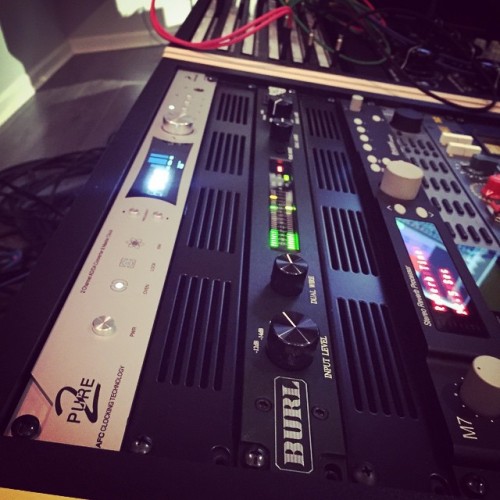
We have added Antelope Audio's new interface the Pure 2 as well as Burl Audio's B2 ADC.

This provides us advantages in a couple of ways. We now have options for the best quality sound coming back from analog equipment during the mixing process. Probably the place it makes the most impact is for mastering. Any serious studio that focuses on mastering needs multiple converters, due to the fact that material will sometimes sound better through different sets of converters. Doing an A/B of converters is one of the first steps in setting up the mastering chain for any studio using analog gear in the mastering process.

Details like this are what set our studio apart from other studios. We are the only studio in the area with multiple sets of mastering converters as well as a true analog mastering backbone. Contact us today to hear the difference.

http://freqzone.com

Saturday, December 13, 2014

EQ Shootouts Coming Soon

That's right, we are going to be doing some EQ shootouts in the studio pretty soon. Analog EQs have strengths and weaknesses. Understanding these is the first step to making the right decision on how to spend your hard earned money. One thing I've noticed is there isn't a lot of audio examples out there for various EQs. We will be running various devices from API, Rupert Neve Designs, Inward Connections, Trident Audio, and a few more through their paces. We will post various audio examples and thoughts. As we collect more EQs we will add more examples.

Thursday, December 11, 2014

The Freq Zone Gets More Dangerous

Dangerous Music that is. We already had a BAX EQ and it's a great piece of gear but with the addition of the new room what we really needed was an analog mastering backbone. It's something that's often overlooked, but when you are doing mastering work with analog equipment a backbone of some type is a necessity. It allows you to quickly compare settings, use volume matching, and perform complex processing tasks in the analog domain. A simple patchbay is just not enough for mastering tasks. This is because of the time it takes to patch something in/out and the perception of the material.


We went with a combination of the Dangerous Music Master and Dangerous Music Liaison. The flexibility between the two devices will allow us to perform pretty much any tasks we would like in the analog domain while treating analog hardware as plugins.

The Dangerous Master and Liaison are not just for mastering. By using the Master and Liaison combination off of the inserts on the console we can quickly audition gear and settings allowing us to make decisions quickly and more accurately then we would have otherwise.

We love Dangerous Music and these devices are great additions to the studio and offer us the flexibility we need in order to deliver the best result possible. Extremely high quality sound in a great package, what's not to love?


Contact us today and find out how these great pieces of gear can make your music sound even better and take your music to the next level.

http://freqzone.com
thefreqzone{at}gmail{dot}com

Monday, October 1, 2012

Stereo Tape Simulator Build

Stereo Tape Simulator Build

I recently decided to augment my analog chain by adding a stereo tape simulator to the mix. Those who know me know I am a huge fan of Rupert Neve Designs. After all I have a RND Master Buss Processor and I absolutely love it. RND makes a Portico 5042 tape simulator that actually uses a magnetic tape head. The thought of adding something with a magnetic tape head in to my chain wasn't an attractive option to me. Mainly because of the potential noise it would add in use with some of my other analog equipment. A quick Google search reveals that others have had the same issue with the RND tape simulator. Also there are only two simulated tape speeds with the RND device, which I find slightly limiting. 

I could have also went with an Empirical Labs EL7 Fatso. The Fatso is a pretty neat device but I was actually looking for something a little different. I wanted to build something this time around. After all I can't have my soldering skills going in the toilet. 

Enter the Sound Skulptor STS

Then I found the Sound Skulptor STS. 


The STS was relatively inexpensive compared to some of the other devices, that is if you decided to build it yourself. Now, I have a little bit of an electronics background but I am far from being an expert. All in all I considered this build fairly straightforward build. If I had to rank the build difficulty on a scale of 1 to 10 I'd probably rank it at a 3 or 4.

All of the components and instructions were included in the kit. 


The Build

What do you really need to know about electronics? First and most obvious is you are going to need to know how to solder. Soldering both standard as well as surface mount components is necessary during this build.

You are also going to need a basic understanding of electronic components. You need to know what they look like as well as a general idea of their function. Even though it's not an overly difficult build if you don't know the difference between a capacitor and a resistor then you should probably not attempt it. For example if you put an electrolytic capacitor in backwards it will explode. A multimeter is also necessary so you are going to need to understand the basic functions of the multimeter as well as how to take measurements with it. 

Most important is you are going to need to know how to follow directions. The build instructions are very logical having you install the shortest components closest to the surface of the PCB first. The build documents contain directions,  schematics, and a layout sheet for the main PCB as well as the LED PCBs. 

I can't stress the importance of having a decent soldering iron enough, especially one with a decent chisel tip. There are several ICs that you have to solder directly to the board without a socket. ICs are sensitive to heat so not getting them too hot is extremely important. I kept my soldering iron at about 350 degrees throughout the whole build which seemed to be the best for all components needed for the build. I recently purchased a Hakko Solder Station FX-888 and I absolutely love it. It comes with a small chisel tip that is great for electronic work. 

The PCBs are all clearly marked, which made it easy to identify where the components go.


There are a total of 3 boards. There is the main PCB as well as the LED boards. You have to actually trim the LEDs and surface solder them to the board. They can be a little tricky at times because they can actually slide around on you while you are surface soldering them and they need to line up with the slot on the faceplate. 


I shouldn't have to say this but since there are ICs involved you should ensure that static is fully discharged from your body before handling them. 

Now the unit is fully assembled and ready for testing. Several measurements are necessary at this point before the unit is usable. Test audio files are available for download if you do not have a signal generator. 


I got the 19" rack faceplate because I wanted to mount it in my rack. 

At the testing phase you need to take certain measurements to ensure you are getting proper voltages at certain points as well as calibrating the LED boards for each side.

The only issue I ran in to during the build was that I was moving a bit faster than I should have and I got complacent with just one electrolytic capacitor. I put it in backward and needless to say it blew up before I had the chance to cut off the power. I got a replacement and all was well.

If you don't work on electronics all of the time you should probably expect to spend a couple of days doing the build and whatever you do don't rush. It may take about 6 to 8 hours to assemble, test, and make ready for use.


In Use

I built this thing a while back so I have been able to spend quite a bit of time with it. There really aren't that many controls. You have an input which controls the amount of the effect as well as an output control. You have a selector switch which you can control the IPS setting from 7.5, 15, and 30. Finally you have the hardware bypass for both the left and right sides.

I use this unit quite often. When I put an analog chain together I usually use this as the first device and drive it in to some of my other analog equipment. Most notably it really excels on a drum buss. I really like the 15 IPS setting with the input at about 50 percent.

Drums are just the tip of the iceberg though. It sounds great on guitars as well as the entire mix buss. Obviously with a much more subtle setting on the mix buss. Even though it's subtle you can really tell it's doing it's job. There is just something about sending the your signal through a tape circuit that really gives you a nice sonic character that many people seem to really like. 

I've used this device in the production of both rock and electronic music and it has worked very well for both types of music.


Conclusion

To close, everyone that has heard the STS has been pretty impressed. I certainly have gotten my money out of it. Even beyond the way it sounds I think the side effects have been just as helpful. I have started to think about why I am not building more equipment myself. When you build equipment yourself you have much more control over it's modification such as choosing different opamps or transformers. 

I have a couple of other projects on the table at the moment. I have a TLA C1 Dual Valve preamp/compressor that needs to be recapped. I am going to recap the unit as well as replace the tubes with some vintage Telefunken NOS tubes.

Also, I am going to build a 51x rack with some API preamp modules. Since I am thinking about building a new studio it would be nice to have a rack of API preamps for recording drums and other instruments.

A few other pictures of the STS build.


Stem Mastering for Enhanced Audio Quality

Stem mastering is a relatively recent development in the world of audio engineering. It’s a process that can have a pretty dramatic...